Local Information
Marsh Common
Information about Marsh Common
Marsh Common, in Weston near Welford, has undergone a considerable transformation since the Parish Council voted to take on its maintenance in November 2020.
Work has been carried out in order to preserve this special place and to facilitate public access. Wet woodland habitat such as this is increasingly rare nowadays and provides an important home to an array of wildlife.
Paul St Pierre of the Environment Agency explains; “In addition to creating and supporting the River Lambourn itself, the springs which feed the river along its length also create important wetlands adjacent to the river. These wetlands are generally labelled as ‘fen/swamp’ or as ‘wet woodland’.


Apparent evidence of a recent party/festival was also found, including signs proclaiming “No Trespassers” and “No Picnic Area”. It is important to note that the public are indeed entitled to access the common, as it is Open Access Land, where ‘right to roam’ applies, and therefore the perfect place for a picnic (as long as litter is not left behind).
Since clearing the common, and with the installation of a new sign and footbridge, the area has been given a new lease of life, at the heart of our parish, as an important and cherished open space for everyone.

The common is accessible via the footpath which heads north from Weston Mill (WELF/27/1), via the five bar wooden gate on the Lambourn Road. Alternatively, it can be accessed via the footpath heading east from Elton (WELF/16/2).

Bat Boxes
James Shipman, Chairman of the Berks & South Bucks Bat Group, gave a fascinating talk about bats at our November Parish meeting (and fortunately for us will be giving another at our Annual Parish Meeting on 25th May 2022). During the meeting James kindly donated a bat box to the Parish Council and later helped install it on Marsh Common.
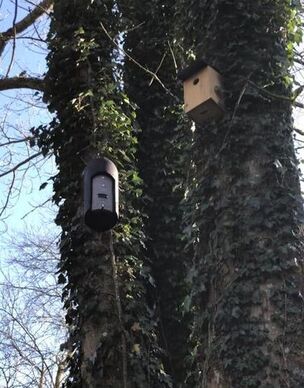
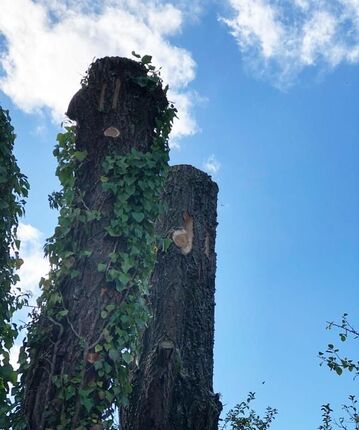
Bats play an important role in indicating changes in aspects of biodiversity but unfortunately in the UK bat populations have declined considerably over the last century. Bats are under threat from building and development work that affects roosts and loss of habitat. The Parish Council has committed to acquiring several more bat boxes for the common, one of which has also been recently installed. Our hope is these can provide additional habitat for the local bat population.
Dormouse Houses
Two dormouse houses have also been installed on the common to provide a cosy home to hazel dormice. The hazel dormouse is one of Britain’s rarest mammals with numbers estimated to have fallen by 52% since 1995. The loss of ancient woodland and hedgerows across the UK is thought to be a major reason for this decline. Living mainly in branches in the woodland canopy, they rarely descend to ground level other than to hibernate.
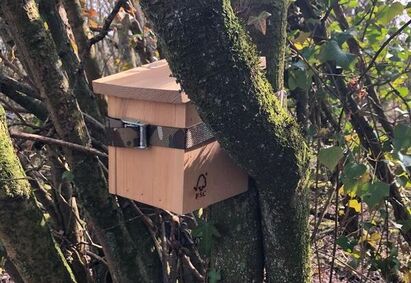
So rare are hazel dormice they are protected by law in the UK, and must not be handled or disturbed without a licence.
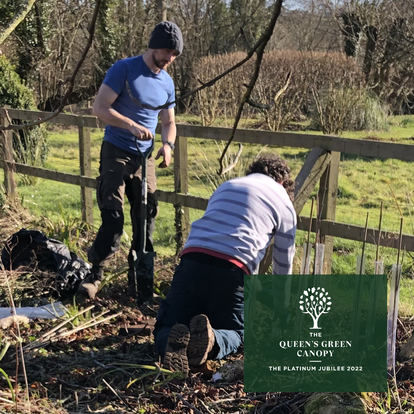
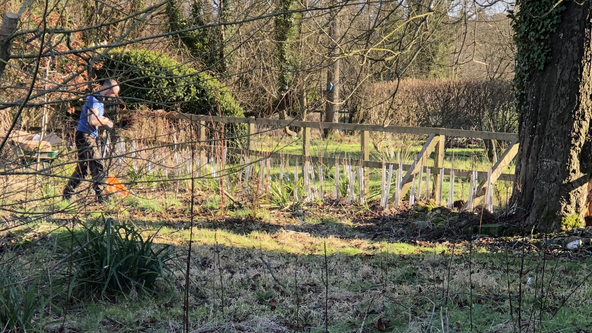
As part of the Queen’s Green Canopy initiative, to mark Her Majesty’s Platinum Jubilee, Parish Councillors and volunteers have planted a hedge for wildlife on the common, comprising of 200 native Blackthorn, Hornbeam, Field Maple, Hazel, Bird Cherry and Hawthorn trees. The hedge should provide flowers, nuts, sloes, hips and haws. Such diverse native hedgerows are great for wildlife, providing a haven for many insects, small mammals, reptiles and even amphibians. They are also good hunting grounds for predators seeking insects and other invertebrates and hedgerow berries provide birds with high-energy food in autumn and winter.
Bug Hotel
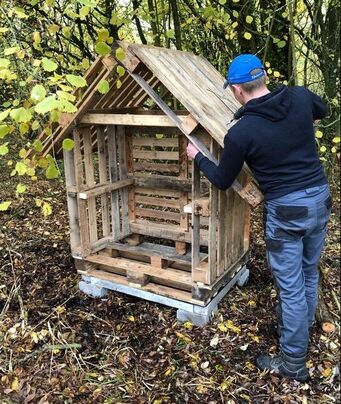
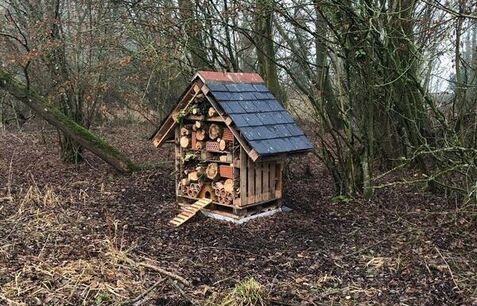
Another new addition to Marsh Common is a fabulous 5 star bug hotel. Constructed using recycled and reclaimed materials, the bug hotel provides shelter for a wide variety of invertebrates as well as small mammals and even hedgehogs. For solitary bees, bug hotels and wildlife stacks provide a great place for them to live, lay their eggs and hibernate. Insects need safe spaces such as this to shelter, hide from predators and raise their young.
Logs have been cut and stacked in the bug house and elsewhere on the common as log piles are really important for wildlife. Centipedes, woodlice and beetles like to burrow into decaying wood and log piles may also attract birds, frogs and hedgehogs looking for sustenance.
All of these additions to the common are designed to help support the important ecosystem this amazing little open space provides and to help play a role in the battle against loss of habitat and climate change.
For more information about the Queen’s Green Canopy
For more information about Berks & South Bucks Bat Group